GBTC: Publish your app with easeDiscover GoodBarber Takes Care and simplify the app publication process for both the App Store and Google Play. Let us handle the technical details for you.Learn more about GBTC
In the aftermath of brilliant discoveries and inventions, the long and often difficult process leading up to them is often forgotten. We imagine them as the fruit of sudden, brilliant realizations, much like the figurative lightbulb that appears above the cartoon character's head. Of course, the truth is usually far messier, and innovation is above all the result of iterative, incremental improvement. It is as much an editorial process as it is a creative one.
What makes the iPad such an interesting product, maybe even more so than it's capabilities as a device, is it's history. The iPad is an almost perfect illustration of technological possibility finally catching up with a vision, the importance of tinkering, constantly adapting and improving an idea, and above all of perseverance.
The best way to predict the future is to invent the future
Leaving aside science fiction and other similar concepts that surfaced at other companies, the earliest premonition of the iPad at Apple itself can be traced back to 1986. At the time, the so-called "Knowledge Navigator" never progressed beyond the concept stage, but it was taken sufficiently seriously that Apple produced a promotional video dedicated to the idea. Although now over a quarter of a century old, some of the features that were outlined in the concept are impressively, even eerily, prescient of the capabilities of today's iOS devices.
The Knowledge Navigator was imagined as a flat, touch-screen device that could also be controlled through voice commands, and respond in kind (Siri, anyone...?). Among other uses, the user of the Knowledge Navigator could have made video calls, visualize data in 3D, and access hypertext information (the WWW, in essence), all at the same time. The short film Apple produced for the Knowledge Navigator is truly worth watching; from today's point of view it appears unbelievably quaint and stunningly prophetic at the same time.
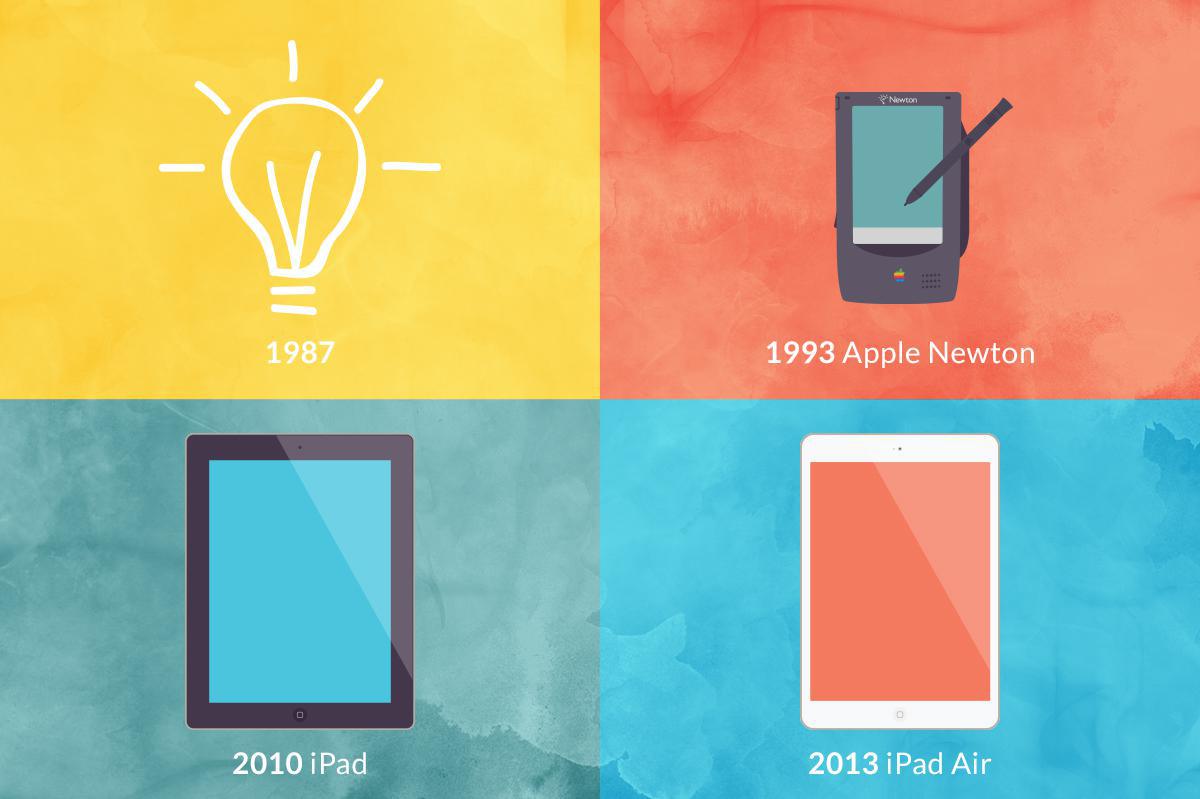
The first physical and commercial iteration of some of these concepts came with the Apple Newton platform. Development of these "Personal Digital Assistants" began in 1987, and the first version, the MessagePad 100, was released in 1993. Like it's successors, it featured no keyboard or keypad for controls, rather, users used a stylus to control programs directly on the device's screen. The concept of the on-screen, pop-up keyboard to enter text also made it's debut with the MessagePad.
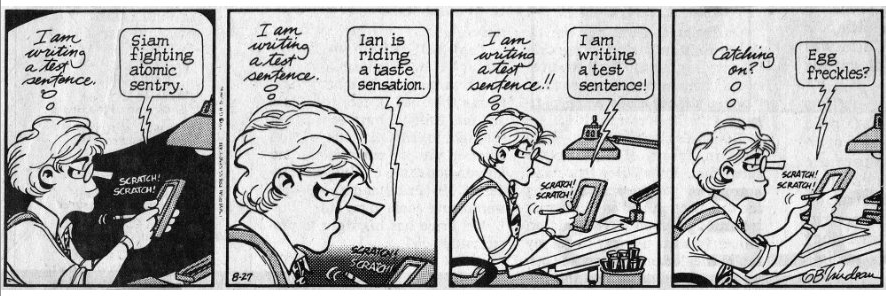
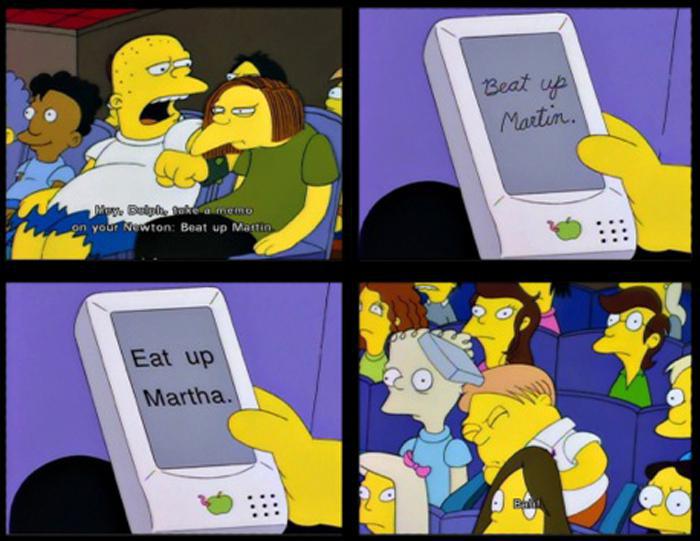
However, what was intended to be the MessagePad's "killer app", Natural Handwriting Recognition, turned out not to work as well as promised, and the MessagePad soon become the butt of jokes in popular culture, and was even lampooned by the "Simpsons". Although Apple moved to improve the handwriting recognition, the damage had been done, and Apple Newton never became a commercial success. Despite the innovation, though, being right too soon is just another way of being wrong, and the platform was quietly buried in 1998.
Success, 25 years in the making
Steve Jobs, reinstated as CEO, felt that the need to use a stylus rather than one own's fingers contributed to the demise of the MessagePad, and insisted that any similar future product would need to be usable without any external aid. The development of such an interface would take another decade, and it's safe to say the success the iPhone encountered vindicated his intuition.
The iPhone, released in 2007, can in many ways be thought of as a miniature iPad, and not the other way around. In fact, although the iPhone was the first product to be launched, it was an outgrowth of the development of the iPad, and not the other way around. The iPhone was the product that familiarized the world with multi-touch navigation, but it's launch and success didn't lead Apple to abandon the tablet project.
In other words, the iPad's key success factor is much the same as that of it's smaller sibling, the iPhone: The user interface is by definition almost infinitely adaptable, allowing developers to develop a dazzling variety of applications that are easy and enjoyable to use.
Adaptive iPad Design
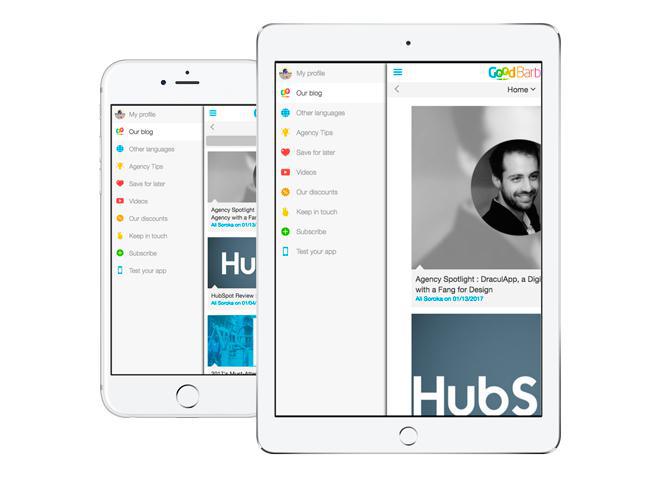
Although conceptually similar, the different screen sizes mean that simply showing an enlarged iPhone app on the iPad, with it's vastly larger screen size, wouldn't be in the spirit of what makes the platform so great. This is why extending the capabilities of GoodBarber to iPad-specific apps was one of our main priorities for the release of the third version.
Our users make a great variety apps, and many of them, like news apps, are a perfect fit for the iPad. At the same time, wanting to let our users make iPad-specific apps confronted us with a dilemma: How can we let our users make two different versions of the app, without needing to configure their app twice? Forcing our users to do so would have been contrary to the very idea of adaptive design, which is of course exactly what we're trying to promote.
100% bespoke apps
The solution was to design every theme, every page layout and every single navigation mode twice: once for the iPad, and once for smartphones. What this means is that the user only needs to make one selection, and GoodBarber automatically creates two apps that are each perfectly adapted to their respective device. Only occasionally, where it's unavoidable, does the user need to make a specific configuration, such as for the splashscreen oder background images. The backend also includes a preview of the app for the iPad, so you can see the difference between the two versions with just one click.
We want GoodBarber to be a tool that lets you make the most out of the platform you're trying to reach your users on. It's the reason we believe in 100% native apps, and it's also the reason we went to the lengths we did to ensure that iPad apps made with GoodBarber offer a user experience worthy of what a tablet has to offer.
How about you: How did the iPad change your habits? Do you use your desktop a lot less now? Or is your tablet mostly a replacement for paper-based newspapers and magazines? Let us know in the comments!
On iPhone Duo, an app switches displays every time the phone opens or closes: the outer display, narrow and tall, then the inner display, as wide as a small tablet. Apple asks apps to treat that switch as a simple change of size, like a window being resized, and draws a rule from it: when the device opens or closes, people find what they left.A GoodBarber app follows that rule to the letter. When iPhone Duo opens or closes, it keeps its screens and lays them out again at their new size: the same screen, the same place, what's playing, what was typed into a form. The gesture changes the shape of the screen, never what you were doing.
 eCommerce
 Memberships
 Chatbot
 Online Courses
 Bookings
 Travel guide
 Events
 Content Creators
 Pickup & Delivery
 Newspaper
 Radio
 Schools
 Faith
 Organizations
 Restaurant
 Grocery
 Custom apps
 Employee Communication

 NO CODE APP BUILDER
 TECHNOLOGY
 WHY GOODBARBER?
 Design
 PRODUCT RESOURCES
 TOPICS
 MOBILE APPS RESELLERS
 DISCOVER