GBTC: Publish your app with easeDiscover GoodBarber Takes Care and simplify the app publication process for both the App Store and Google Play. Let us handle the technical details for you.Learn more about GBTC
If there’s one area of expertise where the need to constantly keep the audience interested is pressing, it is the event industry. If one wants a good turnout, the bar is now higher than ever. How to keep up with people’s expectations? If creating an app for an upcoming event is now a given, the time has come to enter a new dimension, with Geofencing.
What is Geofencing
A geographic area = an automated notification Geofencing allows you to define geographical areas where notifications will be sent out automatically for your app users. Think of geofencing as a customizable virtual area within which you can interact with your app users, by triggering advertisement, offers, designated content, etc. Once you define a geofence your users behavior will trigger the notifications, whether they enter the area, dwell in the area for a predefined amount of time or exit the area.
Aside from the mandatory opt-in process, which is really the only con, the possibilities are almost endless. Relevance is probably the biggest pro. As targeting grows hyper-local, offers get more relevant. Think about it: you gain control other where your user is, what time of day it is. A dream come true for any marketer. What’s more, it’s a one to one basis communication which makes it all the more valuable.
The new flyer What about geofencing for the event industry in particular? For one, it increases attendee engagement. It enables global sponsors to have a local reach. It provides real-time analytics, a whole new kind of event intelligence: know when attendees are part of the event, the duration of attendance, peak attendance, etc.
Looking for inspiring examples? Here are a few breakthrough geofencing techniques.
Concerts and Festivals
Concerts are memorable experiences which tend to naturally drive attendee engagement. Especially with the extensive use of social media, fans now not only spontaneously take photos but also share them, interact with the artists, etc. How is geofencing becoming a part of the concert experience?
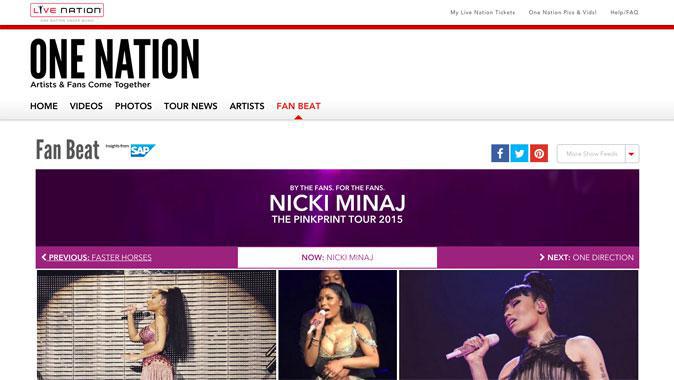
Live Nation has been experiencing with geofencing techniques. Their "Fan Beat" feature curates fan social content through geofencing: "The beauty of geo-fencing is that, unlike a hashtag, you’re not asking someone to take an extra step," Live Nation says. "If you’re literally in that geo-fence, we’re going to capture that and showcase it."
Matchbox Twenty was one of the first bands to pick up on the trend, as early as during their 2013 tour! Nick Lippman, the band's manager explains: "We can talk to fans as they come in and out of the venue, welcome them to the show, give them a hashtag to participate. It’s a great way to get information to people without being uber-intrusive but also remind people what they can do to be an interactive part of the show. We’ve had killer fan engagement."
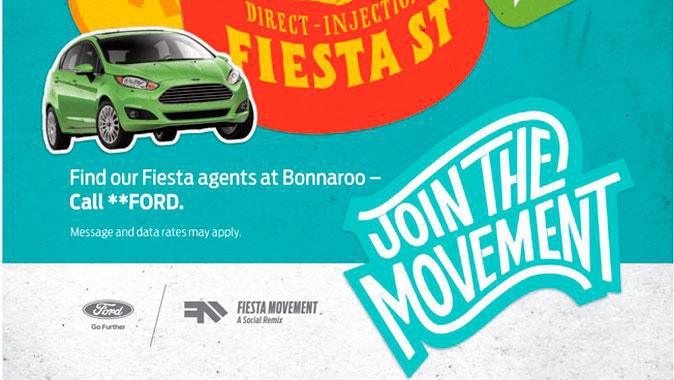
Ford was one of the first brands to test geofencing in a marketing campaign, during the Bonnaroo Music Festival (Tennessee, USA). Ford placed call to actions in strategic areas of the Festival, "Call **FORD". They geofenced the grounds of the Festival and imagined a customized experience tailored to the audience. Users could also enter a giveaway to win a car from the Ford garage placed on site. Driving engagement takes on a whole new meaning :)
One can easily imagine messages being delivered to registered voters at their homes to remind them to cast their vote. Candidates could also geofence specific communities and send out unique messages for each voting segments, low employment areas, high income areas…
Geofencing can also drive up support and engagement during conventions and rallies.
Tourism Offices
To finish on a lighter note, the Montana Office of Tourism also took to geofencing in quite an impressive way, with the help of SMG Advertising .
In order to promote their beautiful skiing slopes they proceeded to targeting consumers who were currently in ski areas throughout the US but with a comparatively less exciting ski experience. "It caught them at the perfect moment and showed them that better skiing was available to them."
They also geofenced the entire State of Montana to create a virtual barrier and thus track the percentage of people who received a Montana ad and visited the state during the ski season.
The short version. Meta catalog, map and Meta catalog, listings are two extensions of GoodBarber, the no-code app builder, that read an agency's "Home listings" catalog, the XML feed it gives Meta for its real estate ads. Meta catalog, map fills a Map section: each property with a known position becomes a pin with its own page, sorted by distance when the app knows where the user is. Meta catalog, listings fills an Article section with the same properties, newest first. You connect them with the link to your catalog feed. Both are free for Content apps.Agencies build this catalog to reach buyers and tenants where they spend their time. Meta's apps were used by 3.60 billion people a day on average in June 2026, up 3% in a year, according to Meta's second quarter 2026 results published on July 29, 2026. Here is how the two extensions play out for an agency in Hamburg.
The short version. Givebutter Events and Givebutter Campaigns are two extensions of GoodBarber, the no-code app builder, that read a nonprofit's campaigns on Givebutter. Givebutter Events fills a Calendar section with upcoming events, at their time in the event's time zone, with their location unless you share it with attendees only. Givebutter Campaigns fills an Article section with active forms and fundraising pages, with their cover image and description. You connect them with a Givebutter API key. Both are free for Content apps: each section counts as one of the extensions included in your plan.A lot of giving already goes through Givebutter. On Giving Tuesday 2025, supporters gave $20 million on the platform, up from $16.4 million in 2024, from more than 93,000 donors across 16,000 active campaigns, according to Givebutter's recap published on December 8, 2025. Here is how the two extensions play out for an animal rescue.
 eCommerce
 Memberships
 Chatbot
 Online Courses
 Bookings
 Travel guide
 Events
 Content Creators
 Pickup & Delivery
 Newspaper
 Radio
 Schools
 Faith
 Organizations
 Restaurant
 Grocery
 Custom apps
 Employee Communication

 NO CODE APP BUILDER
 TECHNOLOGY
 WHY GOODBARBER?
 Design
 PRODUCT RESOURCES
 TOPICS

 MOBILE APPS RESELLERS
 DISCOVER