GBTC: Publish your app with easeDiscover GoodBarber Takes Care and simplify the app publication process for both the App Store and Google Play. Let us handle the technical details for you.Learn more about GBTC
How Progressive Web Apps can help you (re)engage your users
Stéphanie Guerreiro
· 3 min read
With over half of all worldwide internet traffic coming from mobile devices, there’s no doubt about the fact that mobile is king.
However, user behavior seems to be going more towards being fed up with installing applications. Despite the general craze over native applications’ UX, only about a third of smartphone owners download apps each month.
Progressive Web Apps are here to tackle this paradox by solving the application-download burnout issue. The proof is in the 4 points to come.
Progressive Web Apps are easier to promote
PWA’s are accessed via a URL, like a website. Organic indexing, paid indexing, retargeting, you name it...all these marketing tools are now at your disposal to help you promote your beautiful app.
Don’t neglect your very best allies in your mission to promote your Progressive Web App : your users. What’s easier than sharing a URL on social networks, in the blog world, or on other websites? With Progressive Web Apps, your content is now at the fingertips of 3.81 worldwide internet users. In addition, your domain name allows you to capitalize on your brand–priceless.
Users access Progressive Web Apps without any barriers
All users have to do to get to your Progressive Web App is click on a link found on social networks or in surfing the web!
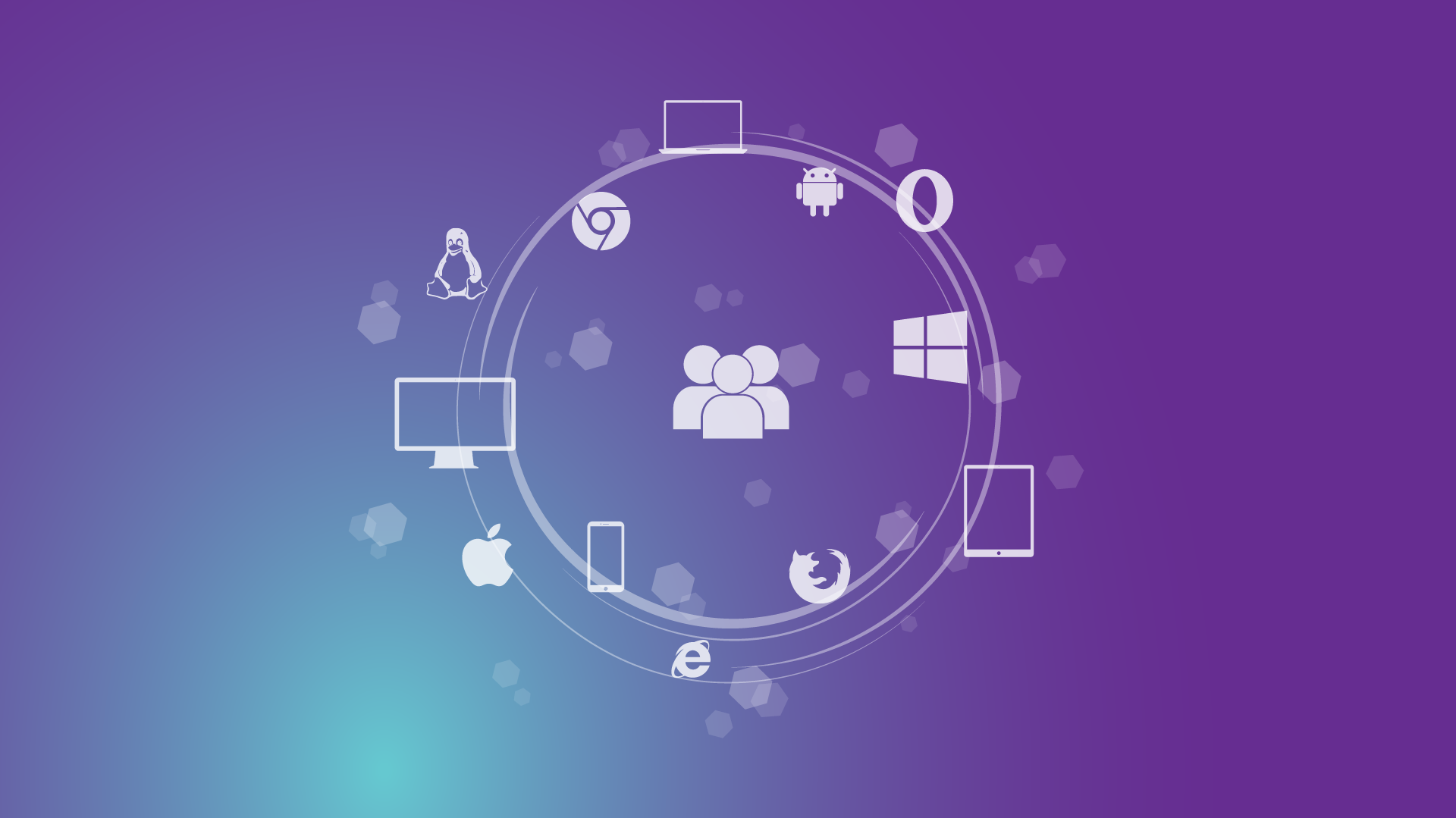
No need to go through a Store or through the whole cumbersome download process. Your users are just 1 click away from your content, which can be accessed in seconds on any device (mobile, tablet, desktop, laptop), on any screen, all via their browser.
Your users don’t need to worry about their device’s available storage space anymore, as Progressive Web App data consumption is low. When a user tries to access a particular page, only the elements necessary for displaying that page are loaded, therefore preserving the device’s storage space. A good example is that on average, a PWA takes up 200x less space than a native iOS app.
Progressive Web Apps are easier to update
Keeping your PWA up to date is easy. All your improvements are immediately applied–no more need to wait or to go through a review process.
Maintaining a native application isn’t always easy. Creating a Progressive Web App also allows you to collaborate with the many talented web developers out there. Progressive Web Apps are also much more cost-effective. Developing just one app allows you to streamline your costs, and on top of that, commission is never taken out of revenues earned from your app–you’re free to do whatever you want!
Your users play a significant role in your app’s continuous improvement. Taking their feedback into account can be done much more quickly with a Progressive Web App. You can carry out user tests and analyze statistics, which will reveal what needs to be improved. In other words, with a PWA if something isn’t performing optimally, it can be quickly readjusted, maximizing user engagement.
Progressive Web Apps allow app success to live on
The undeniable, best point your PWA offers to your users is that it leaves them with the highly appreciated app-like experience they have their standards set on.
Your users can visit your app even if their network connection is poor or nonexistent. Progressive Web Apps use Service Workers heavily, allowing for offline functionality to be optimal in web apps.
They can receive push notifications through your Progressive Web App. The service workers mentioned above are also what manages the reception of push notifications in browsers. We can’t say it enough–this feature is a true revolution that plays a considerable in role in the similarity between native application and PWA user experiences.
Finally, the option to install a Progressive Web App on their devices brings your users an even easier and more appreciated experience. Your users will have access to your content in just one click from their home screen, just as with any other application.
*You can find the current, up-to-date list of features Service Workers account for here .
The short version. Meta catalog, map and Meta catalog, listings are two extensions of GoodBarber, the no-code app builder, that read an agency's "Home listings" catalog, the XML feed it gives Meta for its real estate ads. Meta catalog, map fills a Map section: each property with a known position becomes a pin with its own page, sorted by distance when the app knows where the user is. Meta catalog, listings fills an Article section with the same properties, newest first. You connect them with the link to your catalog feed. Both are free for Content apps.Agencies build this catalog to reach buyers and tenants where they spend their time. Meta's apps were used by 3.60 billion people a day on average in June 2026, up 3% in a year, according to Meta's second quarter 2026 results published on July 29, 2026. Here is how the two extensions play out for an agency in Hamburg.
The short version. Givebutter Events and Givebutter Campaigns are two extensions of GoodBarber, the no-code app builder, that read a nonprofit's campaigns on Givebutter. Givebutter Events fills a Calendar section with upcoming events, at their time in the event's time zone, with their location unless you share it with attendees only. Givebutter Campaigns fills an Article section with active forms and fundraising pages, with their cover image and description. You connect them with a Givebutter API key. Both are free for Content apps: each section counts as one of the extensions included in your plan.A lot of giving already goes through Givebutter. On Giving Tuesday 2025, supporters gave $20 million on the platform, up from $16.4 million in 2024, from more than 93,000 donors across 16,000 active campaigns, according to Givebutter's recap published on December 8, 2025. Here is how the two extensions play out for an animal rescue.
 eCommerce
 Memberships
 Chatbot
 Online Courses
 Bookings
 Travel guide
 Events
 Content Creators
 Pickup & Delivery
 Newspaper
 Radio
 Schools
 Faith
 Organizations
 Restaurant
 Grocery
 Custom apps
 Employee Communication

 NO CODE APP BUILDER
 TECHNOLOGY
 WHY GOODBARBER?
 Design
 PRODUCT RESOURCES
 TOPICS

 MOBILE APPS RESELLERS
 DISCOVER