GBTC: Publish your app with easeDiscover GoodBarber Takes Care and simplify the app publication process for both the App Store and Google Play. Let us handle the technical details for you.Learn more about GBTC
Emotional marketing: your weapon of choice for 2017
Isabella Leland
·Updated · 3 min read
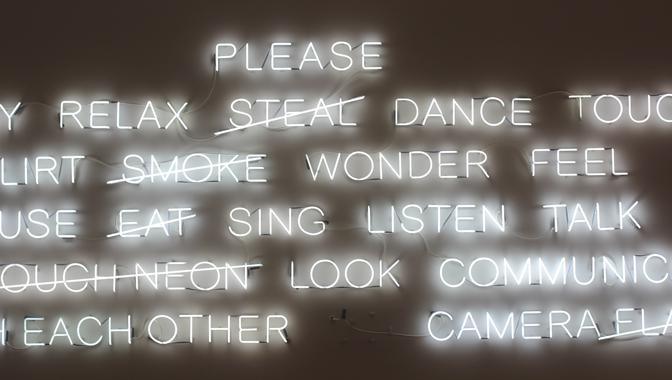
After an unsettling year, let’s hope 2017 will bring some extent of consolation and comfort. Think this context has nothing to do with your business? Think again.
Emotions and consumer decision making are actually more intertwined than they seem. The fact that buying impulses are not so rational isn’t a surprise. After all, compulsive buying is nothing new. But, it’s not just for shopaholics—even when it comes to choosing between two apparently very straightforward, logic related options such as two different softwares for a project, emotions are involved.
If a logo catches the eye, or if the overall image of a brand conveys a particular emotion, it stands more of a chance to make a lasting impression. It identifies itself in the eyes (and heart) of future customers. And it’s a virtuous circle. For instance, a lead will be more likely to recommend a brand if its website or app struck him. In the end, it’s really a win win.
As a result, emotional marketing, isn’t a soft approach, on the contrary, it’s one of the most powerful tools marketing teams should be using to convert clients. How? Here are some of the most important things to bear in mind when it comes to emotional marketing:
Get to know your users
Like with any strategy, if you want to tackle emotions in the most efficient way, it implies conducting studies, creating personas, the same groundwork as usual basically, to know who your users are and how to best impact them.
Clarity is key
It always is, but with emotions it makes all the more sense not to get things mixed up. The idea is to focus on conveying one emotion, which will, in turn, contribute to homogenizing your design around the right color, but also your sales pitch, around a common theme and purpose, etc.
Consider this: a cluttered website, lacking in structure, will not make anyone want to linger. At best, it will leave visitors indifferent, or worse, trigger a negative emotion. On the other hand, a clear and intuitive website (or app) induces satisfaction. A better context to reach your goals, right?
Think outside the box
If we were to stay with the basics, a website for a software could very well consist only of a list of information, not arranged in the most attractive way. But, by personalizing the product, adding a quirky touch, putting the company’s staff in the foreground, thus making the company more human, it adds density to a brand—a brand that’s more likely to be remembered.
Added value is everything
If you want to be remembered, emotions are a great vector. To achieve this goal, the added value of the experience you’re providing is crucial. Of course this will not compete alone against aggressive pricing strategies of competitors or make up for a not so great product to begin with, but, between two identical offerings, emotions can be the extra ingredient to make the difference. It’s also great leverage for increased visibility, in a social media driven world, where the impact of your brand in online conversations does matter.
A great example of the past year, in the tourism sector, is the Visit Norway campaign, with the hashtag #SheepWithAView. Sure it might not result in an instant ticket booking to Norway, but it creates a positive emotion (bringing a smile to your face) which may put Norway at the top of your list the next time you’re looking to get away.
Added value is definitely what differentiates one marketing campaign from the next. Emotions are a powerful tool to create value and a sense of direction, placing user experience at the heart of your every decision.
It also invites marketers to think up every detail, and even to "feel" them. It requires the effort of putting oneself in the customer's shoes, to not only imagine what each detail might convey, but how it will be perceived. All this to create more than just a picture perfect brand, but one that is also inspiring.
The short version. Meta catalog, map and Meta catalog, listings are two extensions of GoodBarber, the no-code app builder, that read an agency's "Home listings" catalog, the XML feed it gives Meta for its real estate ads. Meta catalog, map fills a Map section: each property with a known position becomes a pin with its own page, sorted by distance when the app knows where the user is. Meta catalog, listings fills an Article section with the same properties, newest first. You connect them with the link to your catalog feed. Both are free for Content apps.Agencies build this catalog to reach buyers and tenants where they spend their time. Meta's apps were used by 3.60 billion people a day on average in June 2026, up 3% in a year, according to Meta's second quarter 2026 results published on July 29, 2026. Here is how the two extensions play out for an agency in Hamburg.
The short version. Givebutter Events and Givebutter Campaigns are two extensions of GoodBarber, the no-code app builder, that read a nonprofit's campaigns on Givebutter. Givebutter Events fills a Calendar section with upcoming events, at their time in the event's time zone, with their location unless you share it with attendees only. Givebutter Campaigns fills an Article section with active forms and fundraising pages, with their cover image and description. You connect them with a Givebutter API key. Both are free for Content apps: each section counts as one of the extensions included in your plan.A lot of giving already goes through Givebutter. On Giving Tuesday 2025, supporters gave $20 million on the platform, up from $16.4 million in 2024, from more than 93,000 donors across 16,000 active campaigns, according to Givebutter's recap published on December 8, 2025. Here is how the two extensions play out for an animal rescue.
 eCommerce
 Memberships
 Chatbot
 Online Courses
 Bookings
 Travel guide
 Events
 Content Creators
 Pickup & Delivery
 Newspaper
 Radio
 Schools
 Faith
 Organizations
 Restaurant
 Grocery
 Custom apps
 Employee Communication

 NO CODE APP BUILDER
 TECHNOLOGY
 WHY GOODBARBER?
 Design
 PRODUCT RESOURCES
 TOPICS

 MOBILE APPS RESELLERS
 DISCOVER