GBTC: Publish your app with easeDiscover GoodBarber Takes Care and simplify the app publication process for both the App Store and Google Play. Let us handle the technical details for you.Learn more about GBTC
The press industry is based on communication. It's the content that gives articles or books their value, the paper is just the traditional means we use to spread this content. The invention of the telegraph swept the distance barriers between people away, making communication much easier. This has brought nations closer and offered a great opportunity for publishers to spread their news to a much wider audience.
Nowadays it's all about digital communication, new original media and news flashs. This is the reality of today!
But let's take a step back to when the first major news publications were created.
News in history
The first news publishers made their appearance in Europe in the 16th century. Publications were irregular since there was no postal system, and the news would not go farther than a single city's walls. In 1700 the first daily newspapers began circulating in England, amongst these there were already some of the current major titles, such as the Daily Post and Daily Journal. in 1731 the Gentleman's Magazine was launched in England, giving birth to the now common term "magazine" which describes lighter, more frivolous publications. During the 19th century, journalism experienced a new boost with the industrial revolution, when the first printing machines, as primitive as they may now seem, allowed for a much faster print run than ever before.
But it was only with the invention of the telegraph that the level of communication increased significantly and news could travel long distances, finally making it across city boundaries.
Nostalgia for real paper
I like to define myself as a high tech nostalgic! A wifi bookworm. Wherever I go, I always end up in libraries or bookshops, taking in the fragrance of paper; I love both the stories books tell and the feeling of the pages in my hands. I often can't help running my fingers over all the decorated hard book covers, I love admiring both old books with their yellowed aged pages and photography books with all their bright glossy pages of images. They take me into a new dimension dominated by creativity and fantasy.
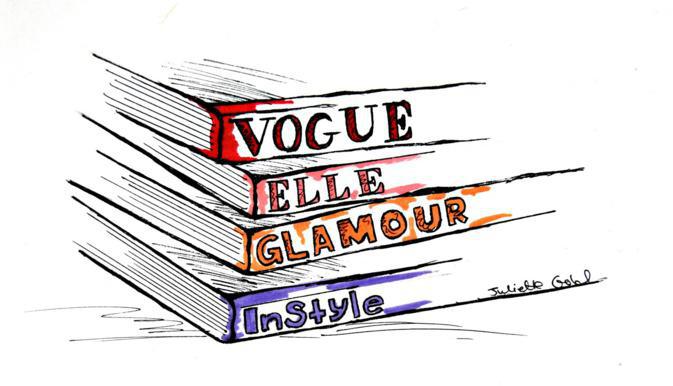
I've always had a passion for photography and a few years ago, when I use to work for a modeling agency, I got inspired by the photo shoots we did and subscribed to all of the major fashion titles of Europe to cultivate my love for books and magazines. This resulted in two consequences within a short amount of time: My credit card started begging for mercy and the walls of my room became an archive of Vogue magazines. It hadn't occurred to me up till then that magazines and newspapers stack up so much faster than books, I could easily read 3 to 4 magazines in a week, or even just in one weekend. Because it's unforgivable for fashion victim like me to throw a away a Vogue issue, I soon had to share my room with hundreds of top models.
From paper to the web
Sometimes the nostalgia for our past can make us blind toward the great new opportunities technology can offer. We must find the right compromise between an eagerness to move forward and the nostalgia of the past that helps us not forget where we come from.
As much as I love libraries I certainly don't want to live in one! I relied on the more "tech" side of myself and decided to switch my source of news from paper to the web, a decision I definitely don't regret!
The only problem was that I always had wait to be at home, in front of my pc to access the news or magazines, while before I could carry them around with me in my bag and read them whenever I wanted. This until I bought myself a tablet!
The tablet revolution
Research shows that tablet usage is increasing at an incredible pace, the number of people that use tablets has grown by 282% from the beginning of 2011 to the beginning of 2013 (for those who don't know, the iPad was launched in 2010).
In 2013 the time spent on digital devices surpassed the time spent watching TV for the first time; with mobile devices being the most used. According to the stats eMarketer released this year, the time spent on mobile devices keeps increasing faster than the time spent on any other media. Ok! So we've all understood how important it is to be present on mobile in order to have success nowadays. But why should I adapt my publication for Tablets and not just for smartphones?
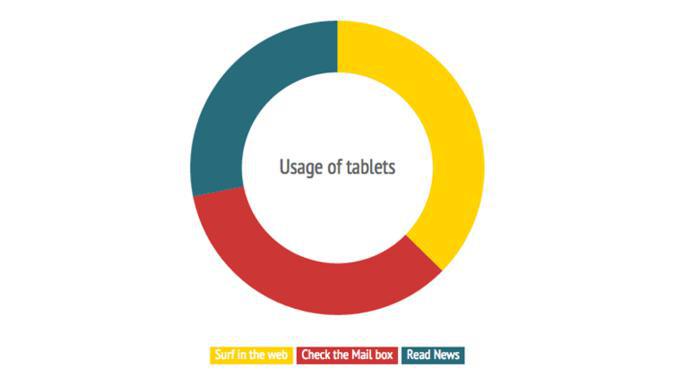
The following image graphically displays the results of an interesting study by VivakI that indicates what activities people prefer to use a tablet for.
So to answer the previous question: Why be present on tablets? Because 70% of an exponentially growing audience chooses a tablet as a means to access the news in the web.
But you may now think: Isn't it enough that people can access my website from their tablets?
The problem is that web sites don't show all that well on tablets, usually they have a menu with lots of buttons and lots of calls to action mixed throughout that can be quite confusing when someone tries to read an article with this device; especially if your website isn't responsive.
A comfortable user experience is vital to encourage people to read your content, users must be able to navigate fluidly through your articles.The content must be the center of attention, without distractions and with an optimized layout for the device your readers are using. GoodBarber offers it's clients the best adaptive design for iPad for this purpose.
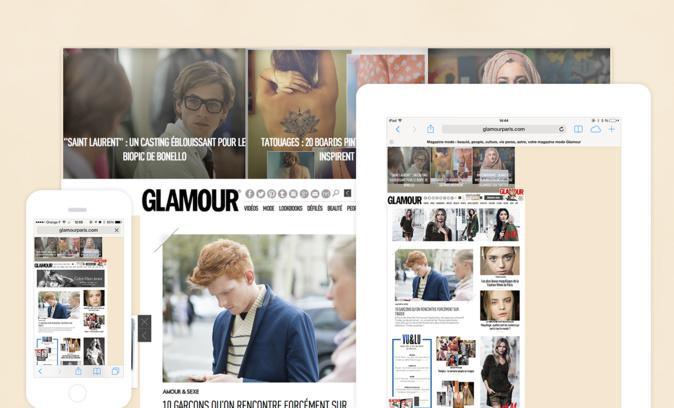
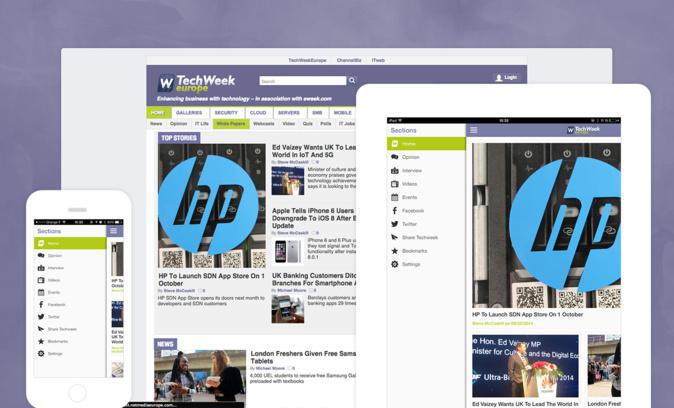
As you can see in the example below, the display of content is perfect and unique for each device.
The value of an app
In addition to the perfect display on mobile, a native app offers many more useful tools for your business, like push notifications that can help draw attention to important news; the editorial statistics that show you the details of usage of your app, which articles your user prefer and so on; the integrated sharing options that can allow your readers to make your content viral; the internal ad network services, definitely interesting to get sponsors...
Now that you've seen how important it is to have a tablet app for your magazine or title, you might be asking yourself where to start! Don't worry, we already thought about this some time back when we wrote the article about how to create the perfect app for a news website.
The sign-in screen now has three new buttons alongside the usual form: Google, Apple, and a login link sent by email.Continue with Google. Pick your Google account and you are in. No new password to come up with, no form to fill in.Sign in with Apple. The same, with your Apple ID: on an iPhone or a Mac, but also from a Windows computer or an Android phone.Your password works exactly as before. You don't have to change your habits: the new options are added, nothing is taken away.
Five ways lead to a fitness app for your business, and each is priced its own way: a flat plan, an add-on to gym software, per client, per subscriber or quoted. The table below compares what each one costs and the job it is built for.
 eCommerce
 Memberships
 RAG Chatbot
 Online Courses
 Bookings
 Travel guide
 Events
 Content Creators
 Pickup & Delivery
 Newspaper
 Radio
Radio Schools
 Faith
Faith Organizations
 Restaurant
 Grocery
 Custom apps
 Employee Communication
 NO CODE APP BUILDER
 TECHNOLOGY
 WHY GOODBARBER?
 Design
 PRODUCT RESOURCES
 TOPICS
 MOBILE APPS RESELLERS
 DISCOVER