GBTC: Publish your app with easeDiscover GoodBarber Takes Care and simplify the app publication process for both the App Store and Google Play. Let us handle the technical details for you.Learn more about GBTC
With our platform, integrating a Loyalty Card into your app is just one click away. However, even though the set up is intuitive, you might be wondering how to introduce a loyalty program to your clients in the most relevant way. Obviously, usage of a loyalty card varies from one business to the next. We hope that the examples we’ve listed below will help you find the inspiration you need to craft a loyalty program which will make your business enter a new dimension.
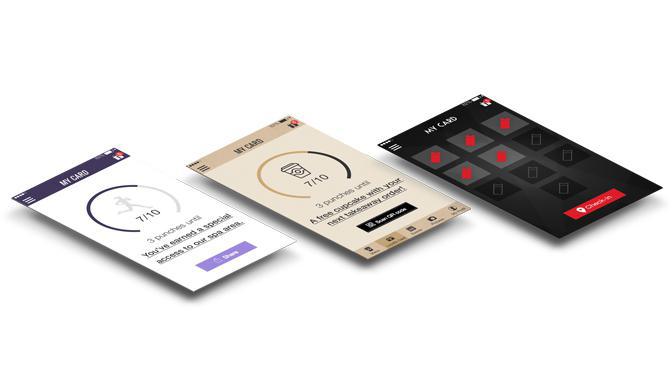
As with most aspects of your app, user experience is key when picking the right validation process for your loyalty card. In your back office, you will see that 3 options are available to collect points. Points can be earned when:
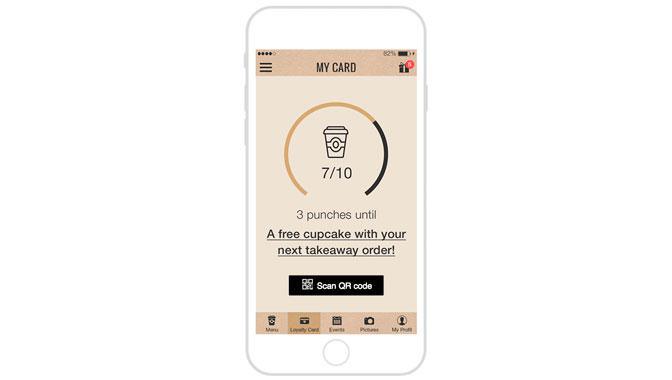
A client completes a purchase and a QR code is scanned
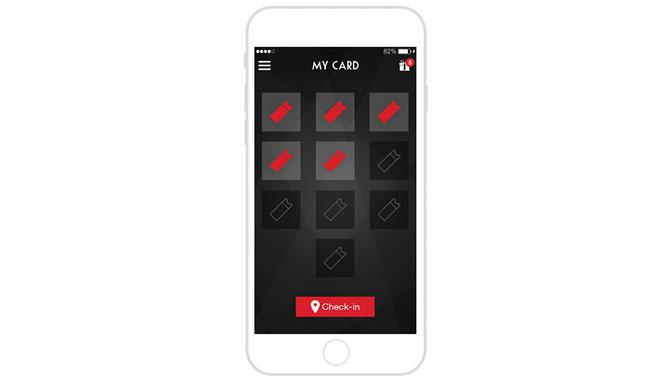
A client performs a manual check-in
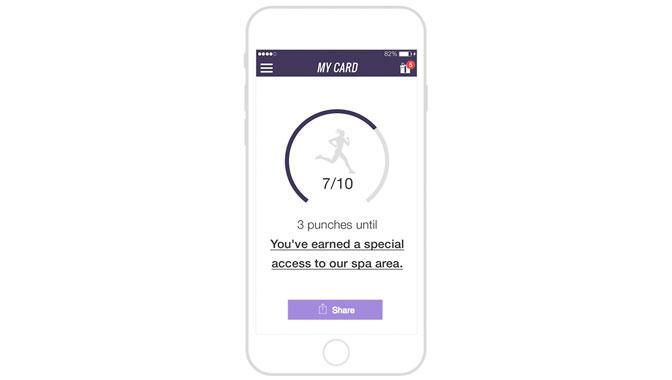
or, after a social media sharing action of a designated URL.
Let’s take a closer look at the different processes and which businesses they best apply to, shall we?
The QR code
In that case, the client earns a point when a QR code is scanned. The QR code can be produced upon checkout (*). It’s the ideal conversation starter if you want to nurture the relationship with your customers. It’s the ideal scenario for a local business, such as a salon, flower shop, snack, coffee shop or a restaurant. The QR code implies an interaction making it a relevant solution for a close relationship with the client, location wise, but also on a human level. It helps build a connection with most loyal customers while serving as a positive incentive to turn visitors into recurring clients.
On the practical side, you can print a ready-made QR code right from your back office, or choose to create yours from scratch. Of course, you can also choose to display the QR code inside your establishment, at the reach of your clients, next to the register for instance, so that you won't have to produce it every single time. Also, don’t forget to come up with an attractive flyer to promote your loyalty program to your customers.
(*) NB: there is a 1 hour delay before another QR code scan can be completed
Manual check-in
Contrary to the QR code, location matters but the interaction is less direct. It has its benefits though. Indeed, in the case of a large scale business, such as a mall or arena, the scenario of a close connection between the manager and the client is a little obsolete. In that case, a manual check-in within a designated area (with precise GPS coordinates) grants the user more freedom to earn a point without getting in the way of his coming and going.
The more fluent the experience, the more chances your loyalty program will generate enrollment. In the event of a concert for instance, it’s easy to imagine that the attendee will want to reach the inside of the venue quickly, to ensure the best seats in the house. For more flexibility, the option to check-in once they are properly seated and waiting for the concert to begin is definitely more user friendly. What's more, to manage your program through and through, you can monitor the amount of time to elapse between 2 manual check-ins, in minutes or days.
Social media sharing
This validation process requires involvement on the part of users, in the sense that they will have to perform the "action" of sharing your brand or establishment on their channels. It’s a winning scenario if you have an engaged audience, with genuine support, eager to let their friends / followers know about your existence.
But if your community is nascent, don’t turn your back on this option just yet. If you set up the right incentives to trigger engagement it can work wonders. Our advice? Don’t overlook the gift offered to users once all the points on the loyalty card are collected. If the prize is rewarding enough, it can be the perfect motivation for users to spread the word on social media ;) (*)
In the end, a well thought out loyalty program might just be what you need to build a community around your app and beyond. It’s the new word of mouth!
(*) NB: there is a 1 hour delay between 2 validations through social media sharing
Last but not least, to further reward users, you also have the option to set up a rewards’ system. Don’t hesitate to make use of it and surprise them. Rewards can be triggered as a welcome gesture, to advertise happy hours… You can also set them up manually and target a designated user group, around an event for example.
Try it for yourself, install our Loyalty Card Add-On now!
Five ways lead to a fitness app for your business, and each is priced its own way: a flat plan, an add-on to gym software, per client, per subscriber or quoted. The table below compares what each one costs and the job it is built for.
OpenAI released GPT-6 Sol and GPT-6 Luna on September 22, 2026, after GPT-6 Astra, the flagship of the family, earlier the same month. Luna is the smallest of the three. OpenAI describes it as its most efficient model for focused, high-volume tasks, and sells it at half the price of GPT-5.6 Luna, the model it replaces in OpenAI's own line-up.The next morning, we moved the AI Extension Builder to GPT-6 Luna, for every app, on the four moments where a model is at work: understanding your request, writing the code of the section, rewriting it when you ask for a change, and answering the questions you ask about what it built.
 eCommerce
 Memberships
 RAG Chatbot
 Online Courses
 Bookings
 Travel guide
 Events
 Content Creators
 Pickup & Delivery
 Newspaper
 Radio
Radio Schools
 Faith
Faith Organizations
 Restaurant
 Grocery
 Custom apps
 Employee Communication
 NO CODE APP BUILDER
 TECHNOLOGY
 WHY GOODBARBER?
 Design
 PRODUCT RESOURCES
 TOPICS
 MOBILE APPS RESELLERS
 DISCOVER