GBTC: Publish your app with easeDiscover GoodBarber Takes Care and simplify the app publication process for both the App Store and Google Play. Let us handle the technical details for you.Learn more about GBTC
Our world is quickly moving towards a global village where information is available digitally and people are connected through digital platforms—SMEs, freelancers and other businesses need to digitize themselves to keep up with the current needs and trends.
In the beginning of the digital revolution, many CEOs of leading companies were convinced that the shift to a technological world would last only for a short period of time.
Nowadays, these people have had to radically change their opinion and accept that if they don't follow the digital trend, their business will be unable to withstand the strong, international competition. No company can afford to ignore the changes caused by digital technology anymore.
Digitalization has caused drastic changes in how, when, and where consumers talk and inform themselves about products and services—through online evaluations and social networks. With smartphones and other digital devices, this phenomenon has lead to new shopping behaviors. Moreover, digitalization offers new solutions to a large number of client problems.
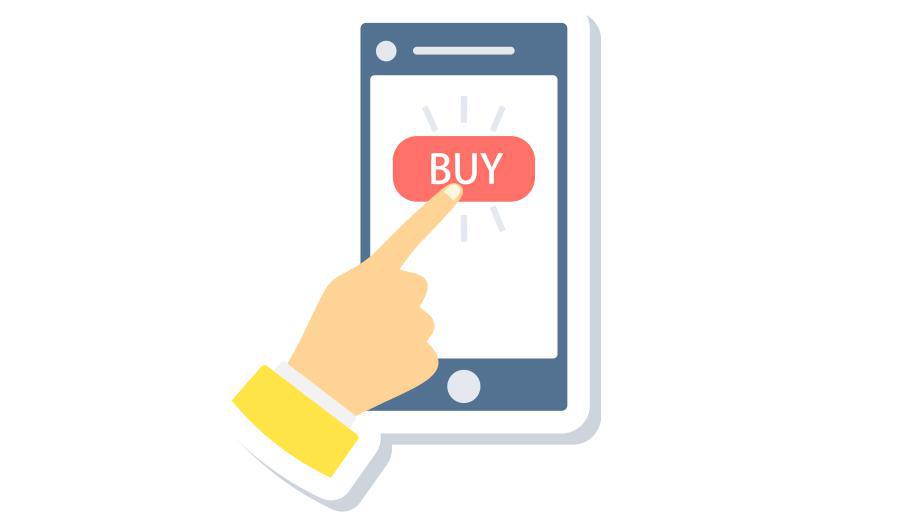
Today, people use their smartphones not only to make calls, write emails, or chat, but to get product information and to make direct, online purchases. The developments of the past years show that direct smartphone purchases contributed to a constant increase in mobile commerce sales, at least twice as much as "normal online commerce". By 2020, the mobile commerce sales volume is expected to multiply more than tenfold; in other words, it will represent about 35% of total online retail sales.
What does this imply for you?
This means that native apps in particular will be highly demanded by your customers. A study of the United Digital Group(UDG) revealed that many online retailers are already losing turnover today, as they fail to offer a smooth, fast mobile solution for their clients. The main finding was that very few online shops make use of all the existing opportunities for their mobile presence. Particularly striking was the lack of use of available opportunities related to responsive design, which include content adjusting dynamically to the display size of the respective device, quickly loading images and videos, etc.
Which kind of businesses should create a mobile presence?
Do you think only big companies like newspapers, fashion retailers and social media platforms need a native app?
Maybe this was the case a few years ago, but today, the situation is completely different due to the enormous number of smartphone and tablet users. In fact, today there are no limits!
Whether you are a hairdresser, doctor, consulting agency, restaurant owner, or university cafeteria... everyone can profit from a mobile application! One can achieve so much through a mobile app: from providing special offers through couponing and push notifications, promoting events, to creating a loyalty program tailored to your needs.
Use an app to create awareness around your business, build a community, establish a strong reputation and increase consumer loyalty, with a Club Card and exclusive privileges for instance. Having your own native app is a unique way to build strong Custom Relationship Management. And, don't shy away from creating a mobile presence due to lack of experience or budget, as, more often than not, even for small businesses, loyalty features cover their own costs to become profitable.
"Go where your clients are!"
Mobility is the core value of success for lots of businesses. You can take the concept one step further with GoodBarber, by enabling cutting edge features such as Beacons and Geofencing.
Geo Alerts are a powerful asset when it comes to engaging with your audience at a crucial conversion point: on location. They make for smarter notifications. The more relevant, the better.
In the end, digitalization is an opportunity for all businesses to organize themselves into flexible, customer-oriented networks—no matter the kind of product or service you offer.
For consumers, physical and online shops are almost one and the same. It's up to you to adapt to this new way of consumer thinking. Now, if you're considering entering the app selling market our guide for agencies will help you get started, with advice to demonstrate exactly what value you can bring to your clients' business and get started with prospecting:
The short version. Meta catalog, map and Meta catalog, listings are two extensions of GoodBarber, the no-code app builder, that read an agency's "Home listings" catalog, the XML feed it gives Meta for its real estate ads. Meta catalog, map fills a Map section: each property with a known position becomes a pin with its own page, sorted by distance when the app knows where the user is. Meta catalog, listings fills an Article section with the same properties, newest first. You connect them with the link to your catalog feed. Both are free for Content apps.Agencies build this catalog to reach buyers and tenants where they spend their time. Meta's apps were used by 3.60 billion people a day on average in June 2026, up 3% in a year, according to Meta's second quarter 2026 results published on July 29, 2026. Here is how the two extensions play out for an agency in Hamburg.
The short version. Givebutter Events and Givebutter Campaigns are two extensions of GoodBarber, the no-code app builder, that read a nonprofit's campaigns on Givebutter. Givebutter Events fills a Calendar section with upcoming events, at their time in the event's time zone, with their location unless you share it with attendees only. Givebutter Campaigns fills an Article section with active forms and fundraising pages, with their cover image and description. You connect them with a Givebutter API key. Both are free for Content apps: each section counts as one of the extensions included in your plan.A lot of giving already goes through Givebutter. On Giving Tuesday 2025, supporters gave $20 million on the platform, up from $16.4 million in 2024, from more than 93,000 donors across 16,000 active campaigns, according to Givebutter's recap published on December 8, 2025. Here is how the two extensions play out for an animal rescue.
 eCommerce
 Memberships
 Chatbot
 Online Courses
 Bookings
 Travel guide
 Events
 Content Creators
 Pickup & Delivery
 Newspaper
 Radio
 Schools
 Faith
 Organizations
 Restaurant
 Grocery
 Custom apps
 Employee Communication


 NO CODE APP BUILDER
 TECHNOLOGY
 WHY GOODBARBER?
 Design
 PRODUCT RESOURCES
 TOPICS

 MOBILE APPS RESELLERS
 DISCOVER